
Did you ancestors speak a language other than English? If so, you likely know the challenge of learning another vocabulary and the reward of being able to translate their records. This additional skill and knowledge can unlock a trove of information, and online tools are making it even easier to transliterate and translate.
March is World Language Month, a perfect time to learn another language, or at least the common genealogy words in other languages. It is also a great time to give some of the aforementioned online tools a try. Of course, we also have books that may be helpful, and many are currently on display on the Lower Level at Cook Park Library, next to the Genealogy Collection. Let’s explore these three options further.
Common Genealogy Words
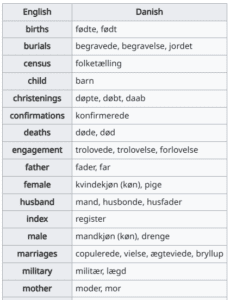 First, you have likely built a vocabulary of popular genealogy words, particularly the ones that you encounter on forms and in records. Learning the most common words found in foreign records is as easy as visiting the FamilySearch Genealogical Word Lists. While this list is not comprehensive, there is another broader set of lists that may be helpful as well. You can start with some of the most common ones and then branch out to more obscure words and letters. To learn how to use these lists, check out FamilySearch’s Foreign Language Research tutorials. Some genealogy societies, like the Polish Genealogical Society of America, also publish lists and may offer to help translate documents.
Online Translation Tools
 Next, online tools like Google Translate and Google Lens (for your phone) have made it easier to translate and read text in other languages, but artificial intelligence (AI) is taking that to a new level. Sites like Transkribus are specifically designed to transcribe and translate documents for genealogy researchers. Many of the other mainstream AI tools like Claude, Copilot, and Gemini also have similar abilities. You may find that using multiple ones is beneficial, particularly if one struggles to read a document accurately. You can also compare and contrast the results to see which one seems to do the best job. Having some knowledge of language will probably be beneficial, even with these advanced tools. Check out these additional suggestions.
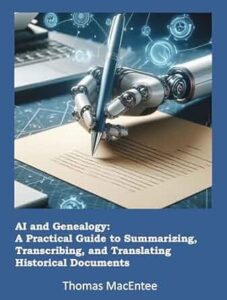
If you are looking to learn more about artificial intelligence and its translation and transcription abilities, check out AI and Genealogy or Artificial Intelligence and Genealogy Research, both written by Thomas MacEntee. Also, explore Cyndi’s List for even more places to learn about online tools.
Library Language Books
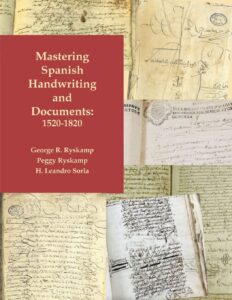 Finally, stop by Cook Park Library this month and check out the genealogy books on display. These include some dictionaries, handwriting aids, and more. Examples include In Their Words (for Polish, German, Latin, and Russian), Mastering Spanish Handwriting and Documents, Tips and Tricks of Deciphering German Handwriting, and the German-English Genealogical Dictionary. There are many other options on display and in the collection though.
Of course, if you are looking to learn a language to possibly visit an ancestral homeland or communicate with a distant DNA cousin, you can always try out Mango Languages, available with your CMPLD library card. Our World Languages Collection also has a lot of options if you are more interested in a book.
Buena suerte!
Discover more from Cook Memorial Public Library District
Subscribe to get the latest posts sent to your email.
Categories: Genealogy