
What do gardening and genealogy have to do with each other? Well, many genealogists also like to garden, but there are other connections as well! Pairing these two hobbies together can lead to fertile ground and fruitful harvests. There may be records about your ancestors that are just waiting to be unearthed and devoured! Check out these genealogical gardening gems for some possibilities.
U.S. Census & Agricultural Schedules
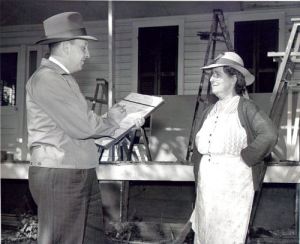 Before the modern era when produce became readily available at the local grocery store, folks had to grow and raise their own food, and this likely included your ancestors, particularly if they settled on the frontier and in more rural areas. If they received a land grant, they likely were expected to clear and farm the land, too. Of course, you can likely identify these folks by perusing the U.S. Census, specifically the Occupation column, in 1850 and beyond.
Once you have identified a farming ancestor on a U.S. Census, you may want to see if they provided additional information on the Agricultural Schedules (1850-1880). These supplementary documents can reveal information about the types of crops they farmed, the amount of land they owned, as well as the value of the farm. You may even discover that they raised livestock! You can search these on Ancestry, which is available for free at the library.
Fraternal Farmers
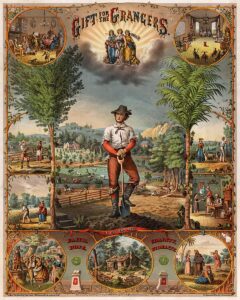 Did you know that some farmers joined fraternal organizations? You may only think of organizations like the Elks or Moose; however, various trades had similar groups. The official organization for farmers we called “the Grange Movement, officially known as the Patrons of Husbandry, established in 1867. Founded by Oliver Hudson Kelley in rural Massachusetts, the Grange aimed to advance the social and economic interests of farmers through education, cooperative purchasing, and advocacy for rural communities.” Your ancestor may have been a member, so it is worth searching for them in the records and publications that are available.
Heritage Gardens
Now that you have identified a farming ancestor, it is time to get your hands dirty! Try out gardening for yourself and see what you can grow. And even if you do not have farming ancestors, you can create a heritage garden to honor your ancestors. Sometimes, these are called memory or heirloom gardens. If you have inherited seeds from your family, continuing to grow those heirloom varieties can be very rewarding. It is a way to connect to your agricultural past as well as propagate these seeds for future generations. If you do not have these seeds, you likely have memories of certain flowers or foods that evoke a strong sense of connection to relatives who may have passed away. You may even have photos that include plants or flowers in them. Why not memorialize your ancestors by planting flowers or vegetables that they grew or loved.
Farming & Genealogy Program
Did you have farming ancestors? Register for our April genealogy program, “Old McDonald Had a Farm,” to learn even more about farming and those ancestors! We have only scratched the surface in this post. There are many other types of records to explore, as Tina Beaird will share.
 CMPLD Podcast Episodes
If you are interested in exploring this idea further, there are a couple of CMPLD Podcast episodes about seeds and genealogy. Listen to the “Growing a Family Tree from Seed” and “Planting Seeds in America” episodes. These episodes contain interesting stories as well as valuable research tips.
CMPLD Seed Library – Opening March 1!
 If you are a gardener or are curious about growing plants, stop by and check out our CMPLD Seed Library! We will have FREE flower, fruit, herb, native, and vegetable seeds available throughout the month of March. Carts will be stationed by the Information Desks at both library locations.
Good luck plowing through this information!
Discover more from Cook Memorial Public Library District
Subscribe to get the latest posts sent to your email.
Categories: Genealogy
Tags: Genealogy